



Tree disease detection in Toronto requires expertise that goes beyond a casual glance at your property. Southern in Toronto and the surrounding area's mature maples, oaks, birches and ash trees face a relentless cycle of fungal infections, insect damage and environmental stress. Tree disease detection in Toronto is the foundation of any sound management plan. Our ISA Certified Arborists diagnose black knot, fire blight, anthracnose, bark beetles and emerald ash borer infestations, then recommend treatment or removal based on the tree's condition, your safety and your budget. We have served Toronto and the surrounding GTA since 2015, and we understand the constraints of urban lots, ravine properties and mature street trees in post-war neighbourhoods.
Why disease diagnosis matters on Toronto properties
A sick tree is not always a dead tree, but waiting for symptoms to worsen can transform a manageable problem into an emergency. Black knot on cherry and plum, anthracnose on oak and maple, and fire blight on fruit trees spread quickly in humid in Toronto and the surrounding area springs. Emerald ash borer kills ash trees within two to three years of infestation, yet early detection and injection can save a mature specimen. Without proper diagnosis, you may waste money on futile treatments or miss the narrow window for intervention.
- We inspect bark, canopy structure, branch dieback and root collar for signs of disease and pest activity.
- We take samples and use field diagnostics to confirm fungal, bacterial or insect damage.
- We document findings in a clear written report with realistic treatment options and timelines.
- We explain the risk: can the tree be saved, or is removal the safest path.
Early detection often means lower cost and less disruption to your landscape.
Local example: A Mimico homeowner noticed black knot on a 40-year-old cherry tree. Diagnosis confirmed early-stage infection. Surgical removal of affected branches and dormant-season pruning cost $380 and saved the tree. Without diagnosis, the property owner would have removed a still-productive tree at a cost of $1,200 or more.
How we diagnose disease in the GTA
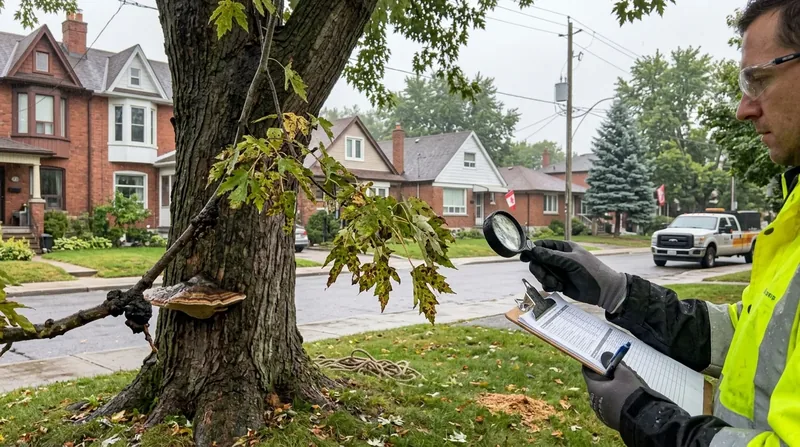
Our process is systematic and transparent. We arrive with climbing gear, binoculars, sample bags and a hand lens. We spend time in the canopy and at ground level, examining the entire tree before offering an opinion. We do not rush diagnosis, because a wrong call can lead to unnecessary removal or wasted treatment expense.
- We assess canopy density, branch angle, bark cracks and discolouration for structural and health clues.
- We look for oozing, sawdust, frass (insect droppings) and entry holes that signal borers or beetles.
- We check for fungal fruiting bodies, cankers and girdling that indicate disease progression.
- We discuss your goals: is this a heritage tree, a safety hazard, a future stump to grind, or a candidate for cabling.
- We provide a written summary with photos, species identification, disease or pest name, severity rating and next steps.
You receive a clear, jargon-free report that supports any permit application to the City of Toronto and gives you confidence in your decision.
Real case: A Richmond Hill property owner suspected emerald ash borer on three ash trees near the hydro line. Our diagnosis confirmed two trees with active galleries and one tree still healthy. We recommended injection for the healthy tree and removal for the two compromised specimens. The City of Toronto required an arborist report for the removals; our diagnosis supported the permit application, and the homeowner avoided a costly dispute over tree preservation.
Disease detection methods and what each reveals
| Method | What it detects | Typical use |
|---|---|---|
| Visual canopy inspection | Dieback, sparse foliage, branch angles, crown shape and stress signs. | All trees; first step in any diagnosis. |
| Bark and trunk examination | Cankers, oozing, cracks, peeling bark, entry holes and fungal fruiting bodies. | Suspected canker diseases, borers, scale insects and bark beetles. |
| Sample collection and field test | Fungal spores, bacterial ooze, insect galleries and larval damage under bark. | Black knot, anthracnose, fire blight, emerald ash borer and wood-boring beetles. |
| Root collar and soil inspection | Girdling roots, soil compaction, poor drainage and root rot. | Decline in mature street trees, ravine lot drainage issues and post-construction stress. |
| Climbing assessment | Interior branch condition, hidden cankers, internal decay and structural weakness. | Tall or dense trees where ground view is insufficient; heritage specimens and safety evaluations. |
Each method builds on the others. A complete diagnosis often combines visual inspection, sample collection and climbing assessment to rule out mimics and confirm the true cause.
Common Toronto tree diseases and what we look for
Southern in Toronto and the surrounding area's climate, clay soils and urban stress create ideal conditions for specific diseases. Knowing what to watch for helps you catch problems early and act before a tree becomes unsafe or unsalvageable.
- Black knot appears as hard, coal-coloured lumps on cherry and plum branches; we prune affected limbs in dormancy and monitor for recurrence.
- Anthracnose causes brown blotches and twig dieback on oak and maple, especially after wet springs; we assess canopy damage and recommend thinning for air circulation.
- Fire blight blackens shoots on apple, crabapple and hawthorn; we remove infected branches to a healthy node and sterilise tools between cuts.
- Emerald ash borer galleries kill ash trees quickly; early detection through bark inspection and canopy thinning can extend life if injection treatment is applied.
- Wood-boring beetles create sawdust and exit holes; we assess structural integrity and recommend removal if internal damage is extensive.
Our diagnosis tells you whether the disease is advancing, stable or arrested, so you can plan removal or treatment with confidence.
What happens after diagnosis
A diagnosis is only useful if it leads to action. We do not leave you with a report and a question mark. We explain your options in plain language and help you choose the path that fits your budget, your property and your goals.
- If the tree can be treated, we outline the cost, timing and success rate for pruning, injection or other intervention.
- If removal is necessary, we provide a separate quote for tree removal and discuss stump grinding or stump removal.
- If the City of Toronto requires a permit, our diagnosis supports your application and accelerates approval.
- If the tree is near hydro lines, we ensure all work respects Toronto Hydro clearance distances and your private service entrance safety.
- We can arrange follow-up inspections to monitor recovery after treatment or to catch new disease before it spreads.
Many homeowners in Toronto, Vaughan and Oakville find that early diagnosis and timely action save money and preserve beloved trees that might otherwise be lost.
Permits and documentation for disease management
The City of Toronto requires a permit for many private tree removals, and a diagnosis from an ISA Certified Arborist strengthens your application. We document disease severity, tree health, safety risk and recommended action in a format the City accepts. We also respect all approach distances near Toronto Hydro lines and your private electrical service entrance. Our work is fully insured, and we clean up all debris on site.
Contact us at (437) 600-1089 for a free estimate and we will schedule a site visit to diagnose your tree. We serve Toronto, Mississauga, Brampton, Vaughan, Markham, Richmond Hill and throughout the GTA.
Prices Tree Disease Detection in Toronto — Indicative pricing
| Service | Price | Details |
|---|---|---|
| Tree disease diagnosis and written report | From $145 | ISA Certified Arborist inspection, sample collection, field diagnostics and written summary with photos and treatment options |
| Diagnosis plus climbing assessment | From $225 | Full canopy and interior branch inspection for tall or dense trees, heritage specimens or complex structural evaluation |
| Multiple trees on one property | From $95 per additional tree | Reduced rate when we diagnose two or more trees during the same visit |
| Arborist report for permit application | From $275 | Detailed written assessment supporting a City of Toronto removal permit, including risk assessment and photos |
| Travel and site visit | Included | No extra charge for properties in Toronto and the surrounding GTA |
| Free estimate and consultation | Free | Call (437) 600-1089 or request online; we respond within 24 hours |
Indicative prices; free, personalized estimate within 24h at (437) 600-1089.