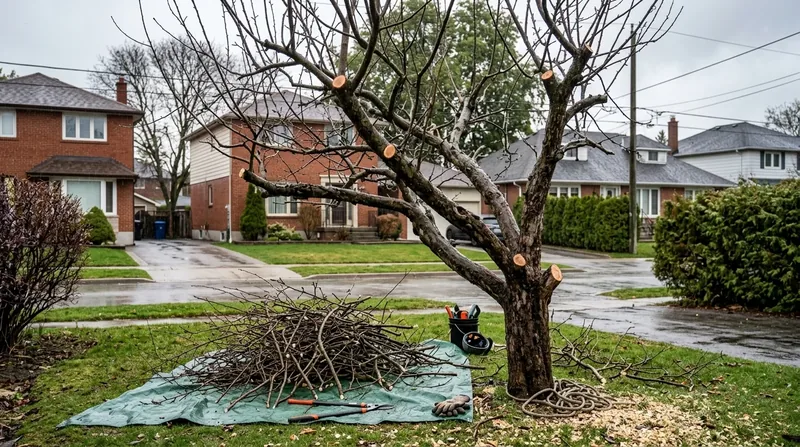




Fruit tree pruning in Toronto requires skill and timing to balance healthy growth with productive harvests. Apple, pear, plum and cherry trees in Southern in Toronto and the surrounding area backyards and orchards need structured pruning during dormancy to establish strong branch architecture, and selective touch-ups in summer to encourage fruit set without excessive vegetative growth. Our ISA Certified Arborists understand the specific needs of each species and the local climate that shapes their development. Whether you maintain a few heritage fruit trees in Etobicoke or manage a small orchard in the GTA, we prune for structure in late winter and adjust for yield throughout the growing season. Call us at (437) 600-1089 for a free estimate, or visit our contact page to request a site visit.
Why fruit tree pruning matters for your harvest
Unpruned fruit trees become dense and shaded, reducing light penetration and fruit quality. Crossing or rubbing branches create wounds that invite disease, and weak crotches (narrow angles between limbs) snap under the weight of snow or a heavy crop. Proper pruning removes competing stems, opens the canopy to air and sunlight, and directs the tree's energy into fruiting wood rather than excessive height. In Toronto and the GTA, where ice storms and freeze-thaw cycles stress older wood, structural pruning in late winter reduces breakage and extends the productive life of your trees.
- Remove dead, diseased or crossing branches to prevent pest entry and disease spread.
- Thin crowns to allow light and air circulation, improving fruit colour and reducing fungal issues.
- Establish a strong central leader or open-vase structure depending on the species and your preference.
- Cut back vigorous new shoots in summer to redirect energy toward fruit development.
- Maintain branch angles greater than 45 degrees to prevent splitting under snow or crop load.
Trees pruned on a regular cycle produce consistently larger, sweeter fruit and remain manageable in size. Neglected trees often require heavy restoration cuts that set them back a year or more.
Local example: A mature apple tree in Mississauga that had not been pruned in seven years required removal of three large competing leaders and thinning of 40% of the canopy. After two follow-up summer touch-ups, fruit yield increased by 60% in the third year, and the tree became safe to walk under during snowfall.
How we prune your fruit trees in the GTA
Our approach depends on the species, age and current condition of the tree. We begin with a visual inspection to assess branch structure, identify defects and determine the best timing. For young trees, we establish a framework; for mature trees, we balance productivity with safety and appearance. Late-winter pruning (February through March) is ideal for structural work because the tree is dormant, wounds close quickly as growth resumes, and you can see the full branch architecture without leaves obscuring the view.
- Inspect the tree for dead wood, disease signs and structural weakness before making any cuts.
- Remove the three D's: dead, diseased and crossing branches, cutting back to the branch collar.
- Thin the crown by removing inward-facing or competing limbs to open the interior.
- Prune to an outward-facing bud or lateral branch, never leaving a stub.
- Return in summer (June or July) for a light touch-up if needed to manage vigorous new growth.
- Clean up all debris on site and haul away branches; we can arrange wood chipping if you prefer.
Each cut serves a purpose. We do not over-thin or remove more than 25 per cent of the canopy in a single year, as this stresses the tree and reduces fruiting. For more information on general pruning techniques, visit our tree pruning service page.
Real case: A cherry tree in Toronto's Leslieville neighbourhood had grown 8 metres tall with a narrow crotch between two main leaders. We removed one leader, rebalanced the crown and thinned interior branches. The tree dropped from 8 metres to 5.5 metres and is now structurally sound and more productive.
Pruning methods for apple, pear, plum and cherry
| Method | Description | Best for |
|---|---|---|
| Central leader | One main vertical stem with tiered lateral branches; resembles a Christmas tree shape. | Apple, pear; formal appearance; strong framework. |
| Open vase | Three to four main scaffolds spreading from a short trunk; open centre for light and air. | Cherry, plum; older trees; maximum light penetration. |
| Summer thinning | Light removal of current-year shoots and crowded interior growth while tree is in leaf. | All species; post-winter follow-up; encourages fruit set. |
| Renewal pruning | Gradual removal of old, unproductive wood over two to three years; reduces shock. | Neglected or overgrown mature trees; restores productivity without major cuts. |
The method we choose depends on your tree's age, species and current structure. A young tree benefits from early shaping; an older tree often needs renewal work spread over multiple seasons.
Timing and seasonal considerations in Toronto
Late winter (late February through March) is the optimal window for structural pruning because trees are fully dormant, wounds heal quickly as sap rises, and you can see the entire branch structure without foliage. Summer touch-ups (June to early July) manage vigorous new growth and improve light penetration. Avoid heavy pruning in autumn, as new growth triggered by cutting may not harden off before frost. Do not prune in early spring when buds are swelling, as this wastes energy. In Toronto's climate, where freeze-thaw cycles and ice storms stress trees, proper dormancy-season pruning reduces branch failure and extends tree life.
Our crews schedule fruit tree work during these windows to maximize healing and yield. Request a free estimate and we will propose the best timing for your specific trees and property.
Safety and cleanup standards
Fruit tree pruning often involves working at height, especially on older trees in residential neighbourhoods like Long Branch or midtown Toronto. We use proper rigging, safety lines and ground spotters to prevent injury. All branches are cut into manageable lengths and stacked for removal or chipping. We haul away all debris unless you request wood chips for mulch. If your property has overhead hydro lines, we maintain safe clearance distances from your private service entrance and never work on the public distribution network of Toronto Hydro. Upon completion, the work area is swept and cleaned so you can use your yard immediately.
For larger fruit tree work or if you need wood chipping services, we can coordinate those at the same time. Our fully insured crews carry liability coverage and are equipped to handle the specific hazards of residential tree work in the GTA.
Prices Fruit Tree Pruning in Toronto — Indicative pricing
| Service | Price | Details |
|---|---|---|
| Small fruit tree pruning (under 4 metres) | From $145 | Structural pruning and light thinning for young or compact trees |
| Medium fruit tree pruning (4 to 7 metres) | From $275 | Full crown thinning, branch removal, and structural work |
| Large or mature tree pruning (over 7 metres) | From $450 | Heavy pruning, renewal work, or restoration of neglected trees |
| Summer touch-up pruning | From $125 | Follow-up visit to manage new growth and improve fruit set |
| Multiple trees (per additional tree) | 10 percent discount | Applied when pruning three or more fruit trees on the same property |
| Free estimate | No charge | Site visit and written quote within 24 hours. Call (437) 600-1089 |
Indicative prices; free, personalized estimate within 24h at (437) 600-1089.